


The healthcare industry is rising every year, bringing new, more unique developments to the industry. However, when you hear that by 2024 the market reached $4.6 billion and studies predict it will double by 2030, you might think these numbers relate to some specific healthcare niche like telemedicine or AI diagnostics.
But in fact, they are all about… healthcare gamification market.
Traditional hospitals and wellness platforms, as well as apps, are actively adopting this approach. However, what is gamification for healthcare, after all? It’s actually something you already know and, moreover, you have probably used it multiple times.
The definition is simple: it’s an approach where game-like elements are a part of digital health experiences. Points, badges, challenges, levels, and leaderboards. You don’t have to be a gamer to know about these things. In the reality of healthcare, these seemingly playful features can create massive changes in patient behavior.
Gamification of healthcare helps to build healthier habits, consistent treatment adherence, and a sense of accomplishment. This is a psychological and engagement realm capable of providing results that even medicine itself rarely provides, especially when supported by purpose-built solutions created through professional gamification software development.
But what is the goal of gamification of healthcare? You might say it’s motivation, and you’ll be right. But it is only a partial answer. It’s also about measurable engagement, adherence, and ROI. And that’s something every CEO, CMO, or CIO in the health sector can relate to.
Now we have personalization based on AI and VR/AR-based therapy. With data-powered digital therapeutics, these modern approaches create new gamification medicine. It has two main features: it is highly practical and sophisticated.
In this article, we’ll explore what’s affecting this growth and discover some examples of gamification in healthcare. We will also reveal how various medical organizations are using game development for healthcare.
Key takeaways
- Gamification in healthcare helps patients to feel more engaged, and it brings long-term behavioral change.
- Top mobile and web platforms are already using healthcare gamification to boost adherence and motivation.
- The healthcare gamification market is expanding at a double-digit growth rate. It means there are new investment opportunities.
- Real-world gamification cases prove that these systems are scalable and effective.
- Providers and health solution developers can use gamification for healthcare to strengthen ROI, patient outcomes, and brand loyalty.
What is healthcare gamification?
Now, let’s explore a broader definition of this. Healthcare gamification is the business of making healthy behavior not only last, but also be pursued. It is designed to give people two things that actually motivate them: a feeling of progress and reward.
Gamification in healthcare, essentially, means applying “game mechanics”. That’s why you see points, badges, and leaderboards in health apps on your phone. But they are also present on patient portals or even therapy programs. The point of these visible rewards is to make the process of care feel like an achievement.
Pro Tip:
Keep rewards meaningful. Don’t rely on points, but add visual progress, encouragement messages, or small milestones. They often feel far more rewarding than random badges. The most important thing, obviously, is the psychology behind those mechanics. Humans love to compete and collaborate. Just as much as they like to feel rewarded. That’s why gamification for healthcare works.
The ecosystem of gamification and healthcare, consisting of mobile health apps, wearable devices, and web platforms, is expanding very quickly.
One of the famous examples is the Fitbit. This app celebrates milestones, unlocks achievements, and lets users compare results with friends. Corporate wellness platforms actually do the same by applying social leaderboards and daily streaks.
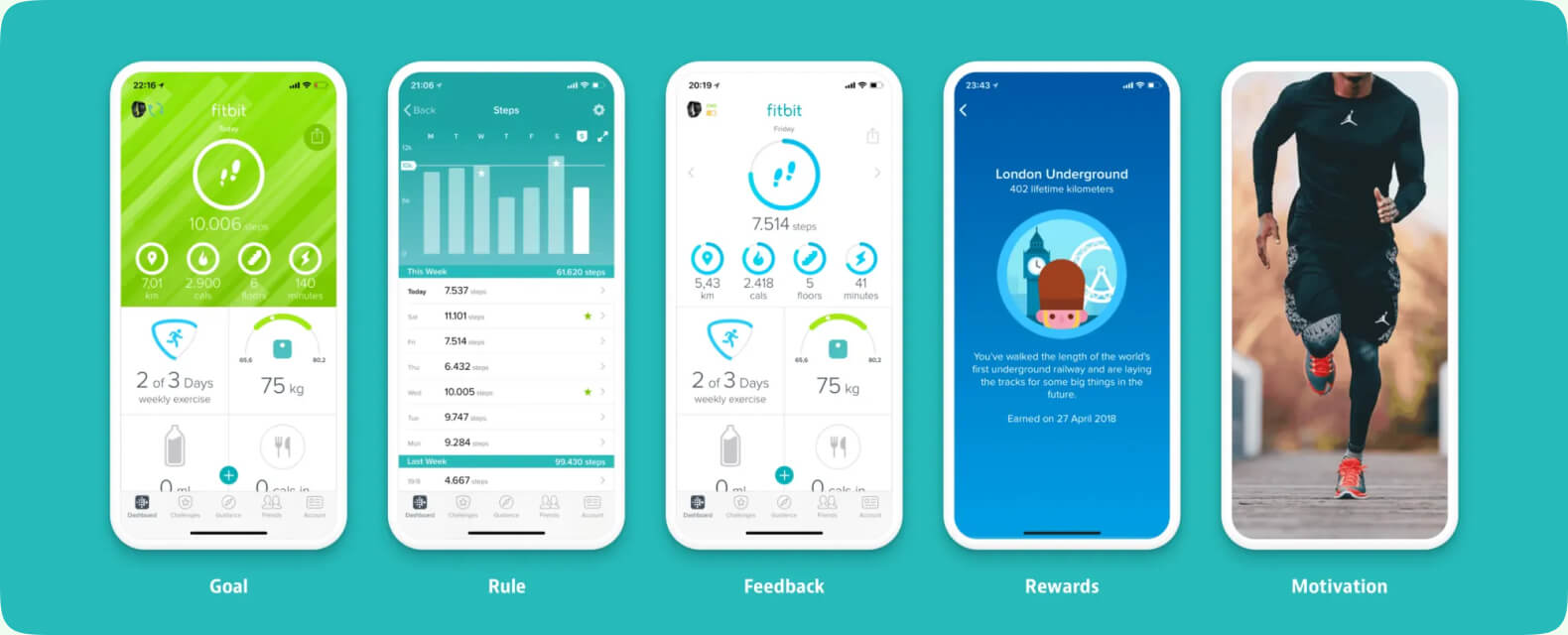
Fitbit’s app interface and various functions.
But gamification medicine is not only about staying fit anymore. Clinically validated, gamified therapies, known as Digital Therapeutics, are changing the face of treatment. These apps are backed by science, sometimes even FDA-approved, and designed to reinforce learning and recovery with in-app rewards.
So, Gamification in healthcare combines psychology, technology, and design to help people better interact with health itself.
Benefits and business impact
You can rarely hear businesses talk about healthcare gamification. Of course, it is seen mainly as a creative feature. But in fact, it has already proved to be a practical business tool that improves engagement and overall ROI.
Gamified healthcare systems combine behavioral psychology with digital product design. They collect better data, lower attrition rates, and strengthen brand loyalty.
Are there any business impacts for medical institutions? Yes, and it is tangible. There are: less drop-offs and more active users. What is even more important, patients can see better outcomes for themselves in terms of process and results, which translates into financial profits for medical institutions.
Enhanced patient engagement
One of the most interesting things that gamification in healthcare provides is genuine patient involvement. Just a few years ago, once you’re a patient, you sort of become devoid of agency. You have to follow instructions. With gamification elements, patients now actively track their progress and set challenges. They see the whole process and tangible results at the end. This behavioral shift is what every app developer and healthcare provider is chasing.
In fact, studies say, gamified healthcare platforms achieve 50% higher daily engagement if you compare them to traditional ones, which lack gamification features.
There’s a feedback loop that comes with gamification:
- Patients stay active
- Clinicians collect more complete data
- Developers gain continuous product insights.
There are, of course, highly positive business outcomes as well. Naturally, higher engagement leads to more positive treatment results, which leads to stronger satisfaction scores. And we all know that satisfaction fosters long-term loyalty.
Improved adherence & outcome
According to the National Institutes of Health, only about 50% of patients with chronic diseases adhere to their treatment recommendations in the long run. This study includes only developed countries.
Adherence, as many people might think, is all about taking a pill at the right time. But that’s only one, the most visible part. It actually means sustaining behavior over weeks, months, and years. Gamified solutions are created to make this far more manageable. For example:
- A patient using a chronic care app might earn points each time they log their medication or complete a daily self-care checkpoint.
- A progress tracker might show how many days in a row they’ve hit their goal, unlocking a badge at day 30, day 60, day 90.
These mechanics work because they change the very idea of how users should interact with their treatment plan. There is a big difference between following instructions and earning achievements. When daily care tasks become micro-goals, the drop-off risk goes down. There are bigger odds of treatment consistency, and therefore, finer health outcomes.
For example, patients with hypertension, diabetes, or another chronic condition usually receive a treatment plan. They have to “take meds”, “monitor BP”, “exercise”, etc. Most likely, after a few weeks, the novelty fades. So sometimes they forget, they skip…and adherence goes down.
But what happens when you actually add gamification into this process?
- There are no more simple, soulless instructions. The app gives a prompt which might sound like this: “Log your morning dose and earn a badge if you complete 7 days in a row”.
- Patients don’t have to monitor glucose manually. The interface shows a monthly streak, and it clearly demonstrates how many days were on target. There also might be a visual reward for maintaining 80 % or more.
- There might be motivational challenges that involve social aspects as well. Patients may join others and hit 10,000 steps three days a week.
As you can see, the main thing here is the visible progress signal. Every time people seek positive results of their efforts, it reinforces behavior. And over time, there will be fewer missed doses, fewer unlogged routines, and a higher probability of sustained care.
In the meantime, the system captures richer data. It could be, on the surface, days adherent, days missed, patterns in patients’ behavior. That’s a very good material to use for clinicians and digital health product teams to create personalized follow-ups or adaptive interventions.
But what about the business perspective? What gains does improved adherence give:
Improved health outcomes. Patients who stay on their regimen will avoid complications, emergency visits, and rehospitalization. Systems that maintain adherence see better clinical metrics.
Positive user reviews & loyalty. Real progress means a lot for every person who fights with any health issue. They’re more likely to engage long-term, recommend the platform or solution, and stick with the provider or brand.
Program credibility & ROI. Once Healthcare providers, insurers, corporate wellness programs, or health-tech vendors provide such adherence improvements, they gain trust. So, there’s a strategic value in such programs. Engagement and adherence can be metrics you can show investors and partners, or even to C-suite stakeholders.
A gamified approach to chronic care and behavioral routines brings very strong business value by keeping patients in the fold. And if it is capable of delivering better outcomes, you will see how brand/organizational strength improved.
Data & insights
Gamified health platforms, once patients interact with them over some period of time, can generate various behavioral and activity metrics data in real time. According to that case study, a healthcare app upon adding some gamified features, recorded a 60% increase in user-generated health data. In comparison to prior versions, this is an enormous boost of highly important data.
This data shows many things: frequency of use, detail of self-reporting, biometric input from wearables, pattern of reward redemption, and even social interactions (peer comparisons, team challenges).
Once you have this data in big volumes, you can apply advanced analytics and machine learning to get even more value from it.
Here are a few examples:
- Platforms can see which users are falling off the routine, and give personalized micro-challenges. There are more chances to re-engage these users when you know exactly where they tend to start missing.
- You can segment people based on their behavior. One cohort, for example, might respond best to social competition, another to individual streaks, and another to collaborative goals. One study of wearables found that among previously sedentary users, leaderboards delivered a 15% step increase, but among highly active users, they delivered no benefit. This tendency illustrates the need to personalize.
- Predictive analytics can flag patients at risk of adherence drop-off or clinical escalation, allowing early intervention.
Pro Tip:
Personalize challenges. Different patients respond to different motivators. Some love competition, others prefer quiet progress. Let behavioral data guide your challenge design.
Gamification and AI help you understand user behavior better and anticipate challenges. Plus, that’s how they add personalization.
But what does it bring for healthcare organizations?
- Better service offerings thanks to rich user data;
- Data-driven personalization for higher adherence and better clinical outcomes.
- Increased lifetime user value
Business ROI
Gamification in healthcare today is far more than a clever user-experience trick. It’s a strategic tool that amplifies profit, performance, and operational efficiency.
When healthcare providers, insurers, or wellness platforms adopt gamification for healthcare, the objective extends well beyond increased engagement. With the right design, gamification becomes a performance multiplier: it accelerates user acquisition, boosts retention, deepens loyalty, and unlocks new revenue streams while reducing costs.
One of the most compelling cases comes from Fitbit’s corporate wellness initiatives. Their data demonstrates how gamified wellness, paired with tracking devices and incentive frameworks, delivers a strong ROI for employers and healthcare systems.
- In one large self-insured employer study (over 20,000 employees, a bit old though), Fitbit’s wellness program participants incurred 24.5% less in annual healthcare costs than a control group after two years. It equated to about $1,300 less per participant in the second year.
- The evidence also showed improvements in health metrics. For example, participants in the program saw average LDL-cholesterol reductions of 12 points and glucose level reductions of 17 points after year one.
These outcomes illustrate how gamification and healthcare solutions can can drive real financial impact when scaled thoughtfully, using the same engagement mechanics proven effective in areas like financial literacy games that educate users through interactive challenges and rewards.
But the impact goes deeper. Gamified health platforms naturally lower user acquisition costs because people talk about them. They share badges, compare scores, and invite friends. Each one of those interactions is a mini marketing campaign that costs you nothing.
Once users join, they stick around longer because the experience feels personal and rewarding. And that retention feeds straight into digital health ROI.
For healthcare providers and insurers, this is where gamification starts showing its real edge. Better adherence means better patient outcomes. Better outcomes mean stronger reviews, lower churn, and higher trust in the brand.
Financially, it also means fewer hospital visits, fewer complications, and less money wasted on uncompleted treatments. Put simply, gamification makes healthcare more profitable, scalable, and sustainable.
Key trends in healthcare gamification
The pace of innovation in digital health means that gamification in healthcare is moving far beyond badges and step counts. Today, it’s about deeply personal, AI-driven experiences and real-time human behavior adaptation. For healthcare executives, product managers, and investors, this is the space where meaningful business opportunity meets meaningful patient impact.
AI and personalization
Gamified health solutions used to follow a one-size-fits-all approach: you earn points for steps, badges for milestones, and maybe share on a leaderboard. But now, thanks to advances in artificial intelligence and behavioral analytics, gamification for healthcare is becoming intensely personalized.
A user in a diabetes-management app might start with a standard step goal and a weekly medication-log challenge. But once the system recognizes that their adherence dips on weekends and sleep quality drops before high-glucose readings, an AI-powered gamified module kicks in. It may suggest a mini-challenge: “Log your evening snack, take a 5-minute walk before bed, unlock a night-owl badge”. As the user interacts, the challenge adjusts: fewer steps if fatigue is detected, more social prompts if motivation drops, bonus points for consistent food-log entries. This is healthcare gamification with real intelligence behind it.
Reports show that this evolution is not just theoretical. For example, according to an article from Healify, apps are using AI to monitor metrics like sleep or stress and then “adjust your challenges and rewards to match your current state”.
From a business perspective, this trend provides major value. Digital health ROI becomes far stronger when users don’t drop off. When gamification is personalized, engagement goes up, retention improves, and outcomes become more predictable.
That matters to hospital CIOs, innovation officers, insurers, and wellness-platform product leads alike. They can point to better adherence, stronger data traction, and measurable metrics.
VR/AR technologies
Virtual and Augmented Reality have become powerful engines for gamification in healthcare. When patients step into a virtual environment that mirrors their therapy goals, something… clicks.
They don’t need to do dull balance drills and wonder whether that helps them at all. No, they are after interactive goals in 3D spaces. The main change here is actually clinically measurable. Research shows that VR-based rehabilitation can improve motor function by 20–30% compared to traditional therapy programs.
In real-world hospital settings, VR healthcare gamification is being used to speed up recovery, reduce anxiety, and even manage pain. For instance, VR systems like MindMotion and XRHealth engage patients in virtual tasks that retrain their brain-to-muscle coordination after stroke. The sense of progress becomes visible and emotionally satisfying, pushing adherence higher.
Medical training is also being transformed. Surgical trainees can now practice complex procedures inside realistic VR simulations that track precision, reaction, and timing. This not only improves skill retention but also reduces training costs. For hospitals and universities, this means a smarter, safer, and, yes – cheaper way to train professionals before they touch a real patient.
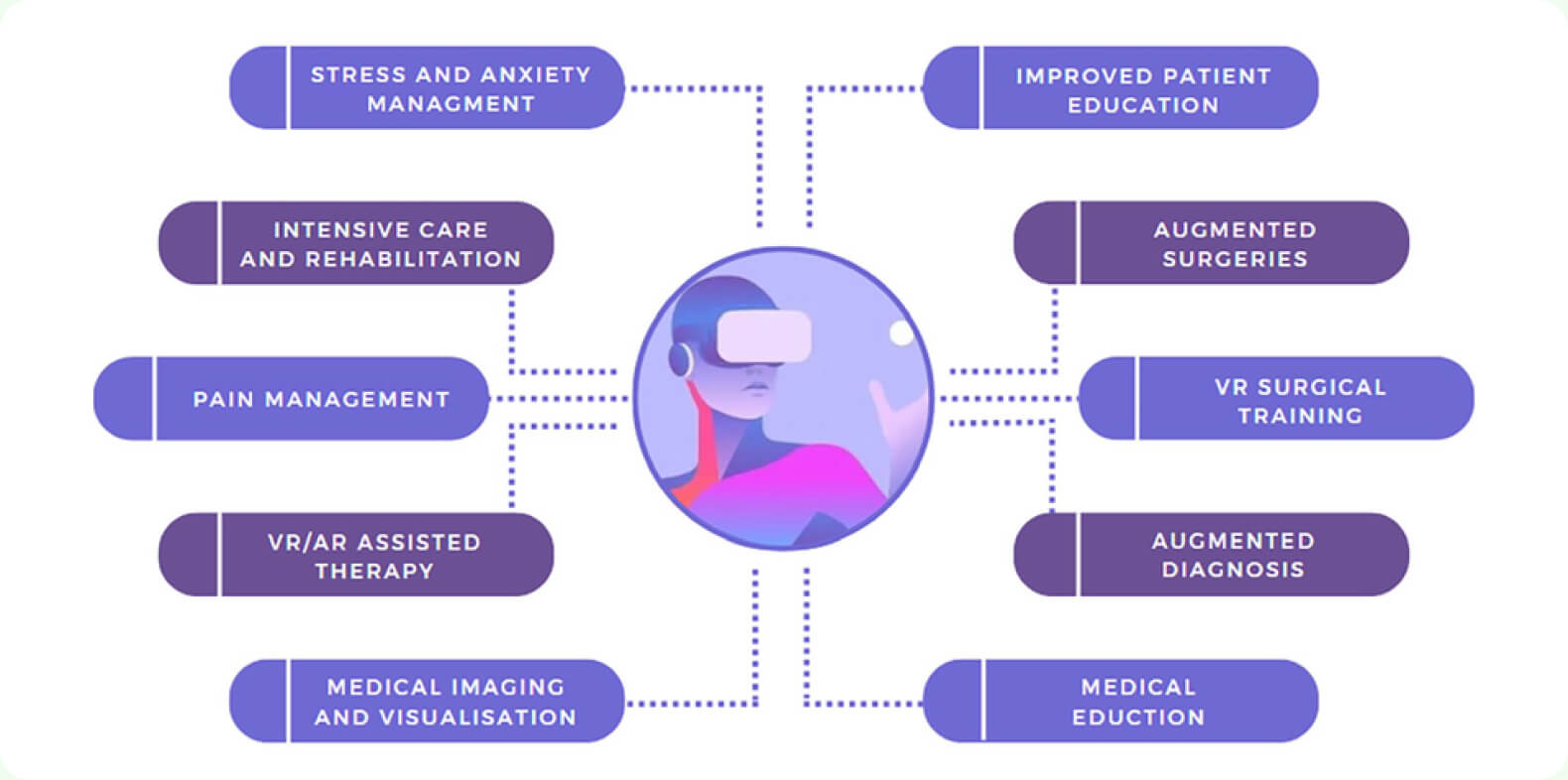
Various uses of virtual and augmented reality in healthcare.
What about a business standpoint? VR and AR represent is a huge part of the broader healthcare gamification market, and it will definitely be a highly important thing in the future. Immersive therapeutics and training simulations affect ROI, so hospitals and various medical institutions have to keep up.
Did you know?
In a pilot study of home-based VR gamified rehabilitation for stroke patients using the Rehago system, over a 6-week intervention the average improvement in the Functional Independence Measurement (FIM) score was +5.54 points, and the quality-of-life score (EQ-5D-5L) improved by +7.13 points
Mobile-first & wearables
If VR is the frontier, mobile and wearable tech are the backbone of game development for healthcare. Most gamified health programs now live in your pocket or on your wrist.
Fitbit, Apple Health, or Garmin Connect: these apps made movement, mindfulness, and medication tracking into continuous mini-games. The phone, without exaggeration, becomes a health hub. And the wearable becomes a game controller for real-life wellbeing.
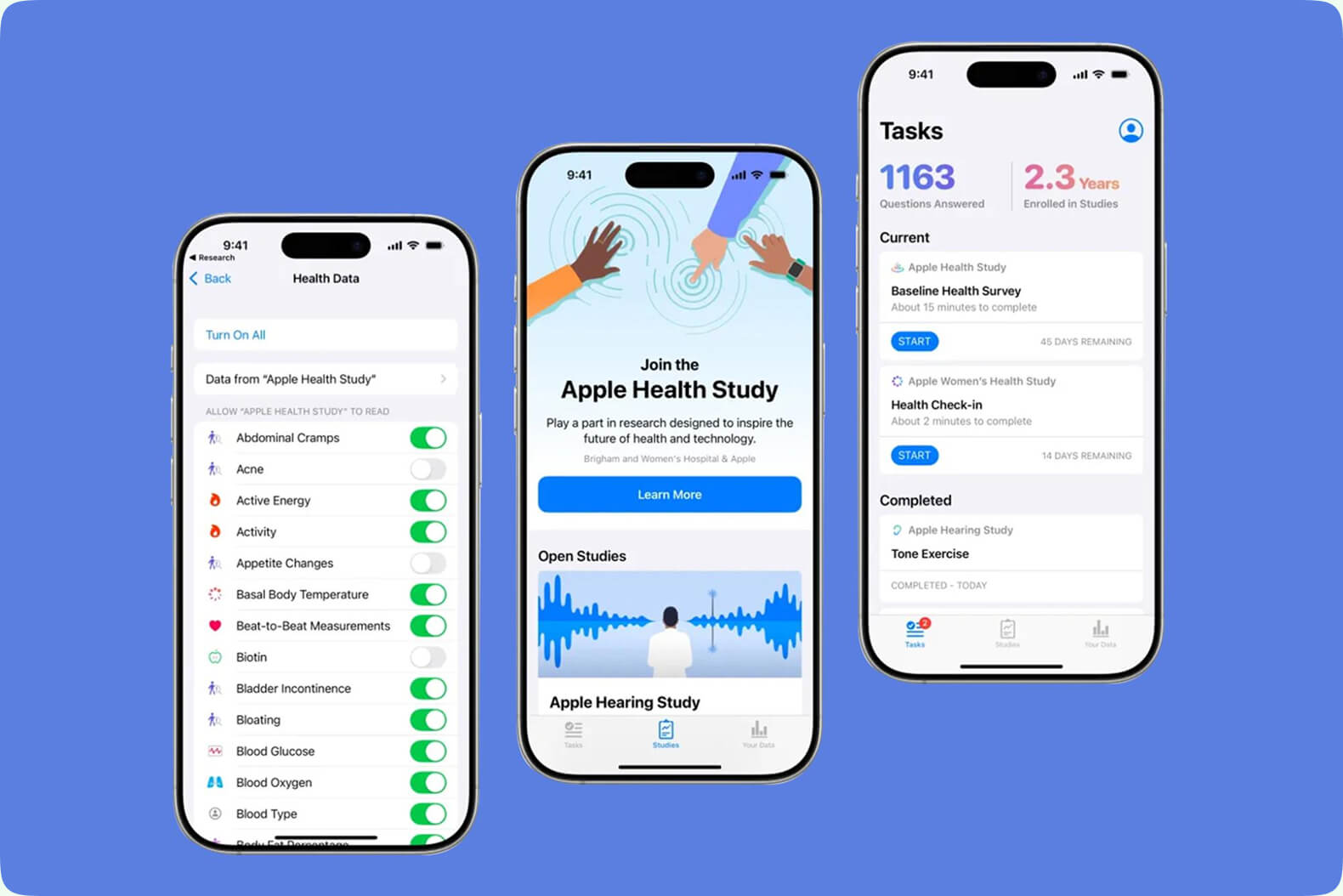
The magic is in the IoT-powered engagement loop. A wearable records your data (heart rate, sleep, steps, oxygen levels) and sends it straight to the app. The app translates that into something emotional: progress bars, badges, team challenges, leaderboards. This constant flow of data fuels healthcare gamification systems It’s a closed-loop experience that keeps users checking in, competing, and improving.
Corporate wellness programs are leaning heavily on this approach. Insurers and employers use mobile-first gamification to promote preventive health and cut costs.
From a business perspective, mobile-first gamification delivers scale without friction. Patients don’t need special gear or long onboarding. If they have a smartphone, they can participate. That means hospitals, wellness startups, and insurance providers can engage thousands of users instantly while collecting valuable data for future personalization and predictive analytics.
Mental health
People are tired of apps that ask them to “just check in” and then disappear. Gamification in mental health changes it: it treats emotional work like something you can practice, measure, and feel good about doing.
Users get small challenges, visible progress, gentle feedback and a reason to come back. That’s the power behind the best examples of gamification in healthcare: they don’t make feelings a game, they make the doing of mental health more human and habitual.
There’s a measurable lift when designers borrow from games. Systematic reviews and trials have shown that apps with game-like elements tend to improve engagement and adherence versus plain-vanilla digital therapy tools.
A JMIR systematic review found that feedback, goal-setting, and rewards often drive those gains. And what are those? Right, they all are gamification features.
For teams doing game development for healthcare, it is important to focus on tiny, repeatable wins and meaningful feedback loops.
Did you know?
A study of digital therapeutic apps for adults with type 2 diabetes found that using gamification features helped reduce HbA1c levels (an indicator of long-term blood glucose control) by an average of ~0.8% and savings of approximately US $1,500 per patient.
Regulatory & digital therapeutics
This used to be the part where skeptics would shrug and say “cool idea, but not medicine”. That’s changing fast. Digital Therapeutics – software that is clinically evaluated to prevent, manage, or treat conditions is carving out a real place in healthcare. The DTx Alliance and multiple peer-reviewed reviews lay out what DTx means: evidence-based, often prescription or clinician-prescribed, and evaluated in trials just like drugs or devices.
You only need one headline example to see the shift: a game-like product (EndeavorRx) received FDA authorization after multiple clinical studies showing objective attentional improvements in kids with ADHD. That milestone reframed how regulators, payers, and clinicians think about play.
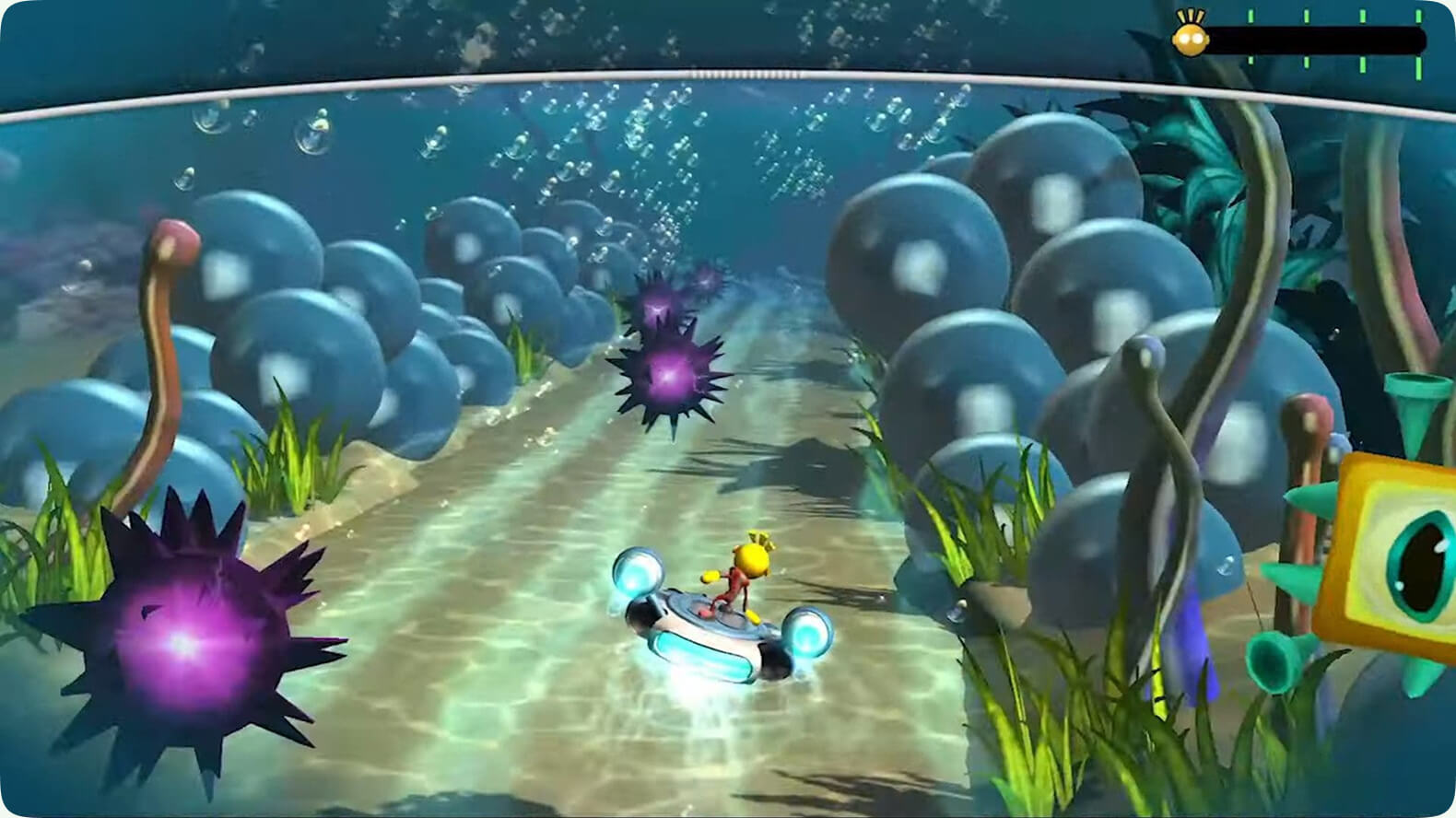
A gameplay of EndeavorRx, a game for kids with ADHD.
When backed by trials and data integrity, game development for healthcare can be a prescribable intervention.
Use cases and examples of gamification in healthcare
If you want to see what happens when game mechanics meet real health outcomes, all you need to do is to look at the last decade of app innovation. Across fitness, mental health, chronic disease management, and corporate wellness, examples of gamification in healthcare have moved from novelty to necessity.
Whether it’s a running app that turns your morning jog into a post-apocalyptic mission, or a corporate wellness platform that quietly trims healthcare costs, the pattern is the same: when people enjoy the process, they stay consistent. And consistency is where the ROI lives.
Fitness & lifestyle apps
Few areas show the impact of gamification in healthcare as clearly as fitness. Ten years ago, tracking steps or calories was just data entry. But today, it is a game where you can actually win.
For example, the app Zombies, Run! gives another look at running, making it an immersive, even story-driven adventure.
To use the power of storytelling in this context is simply a great and frankly unexpected solution. So, it is not running as one used to approach it, but a quest where you have to escape zombies and collect supplies. And, if you hear them nearby, you have to speed up.
There are various narratives for walking, jogging, and running. No wonder this fitness game has 10 million players!
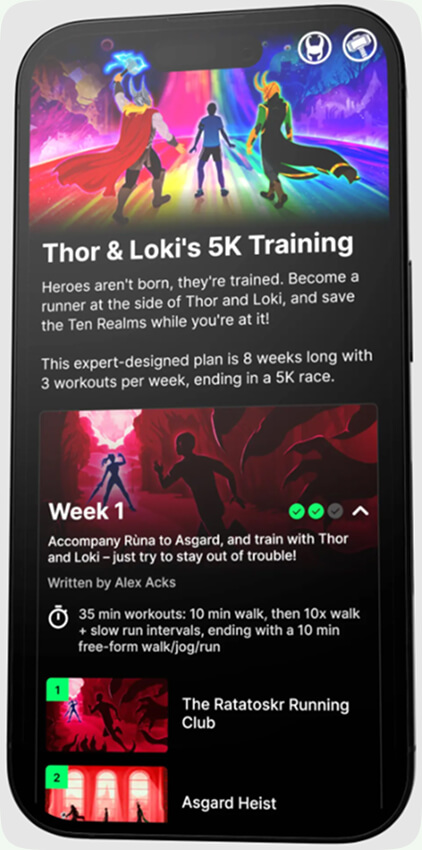
One of the storytelling tropes in the “Zombies, Run” app.
Chronic disease management
Chronic illnesses are never fought in a week. They’re managed for life. And that’s where motivation often falters.
When treatment becomes routine and invisible, adherence drops. Gamification in healthcare changes that rhythm. It makes daily management visible, rewarding, and even a little fun, giving patients the same sense of progress they’d get from a fitness tracker, but for their health.
MySugr, for instance, is one of the most recognized examples of gamification in healthcare. Designed for people living with diabetes, it rewards users with points and “monster-taming” mechanics for logging meals, blood glucose levels, and medication.
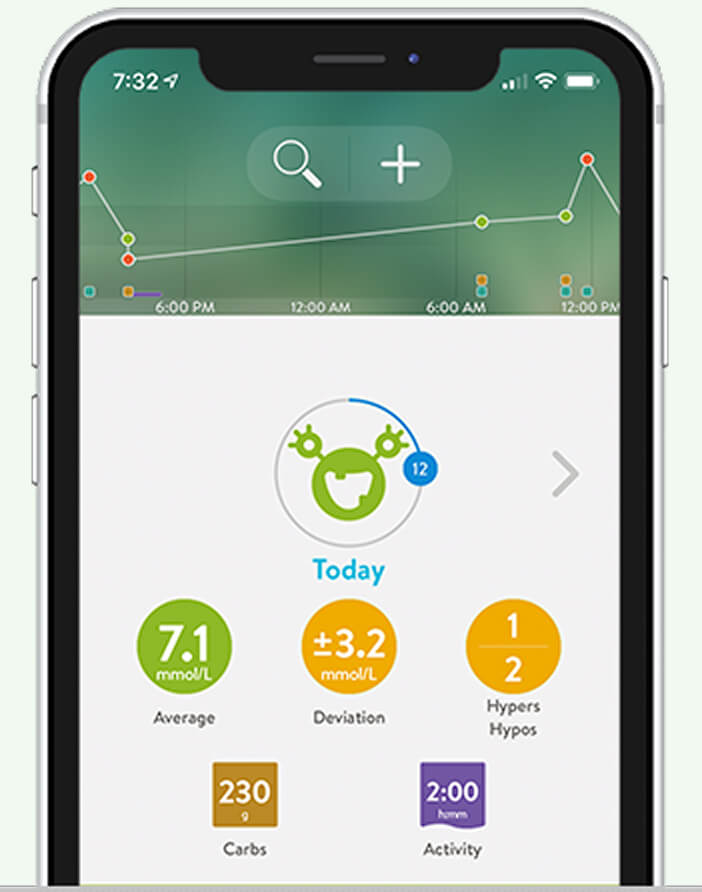
MySugr interface showing basic user data.
The idea is deceptively simple: when patients see their small wins stack up, self-care feels less like a chore and more like mastery.
Perhaps the most striking case is Re-Mission, a video game developed by HopeLab for young cancer patients. In the game, players control a tiny robot that travels through the human body to destroy cancer cells and manage side effects.
Daily challenges, progress tracking, and instant feedback keep users engaged. Over time, those small, consistent actions lead to real behavior change.
For insurers and clinics, this means measurable ROI – fewer hospital readmissions, lower treatment costs, and more satisfied patients. For startups and developers, game development for healthcare represents a rare mix of creativity and proven health impact.
Physical therapy & rehab games
Rehabilitation can feel repetitive. And repetition is the enemy of motivation. What can gamification do here?
VERA (Virtual Exercise Rehabilitation Assistant) uses motion tracking and gamified visuals to make recovery interactive. Patients see avatars mirroring their movements, earning feedback in real time. Meanwhile, GameWheel transforms upper-body exercises for wheelchair users into immersive digital challenges, giving therapy purpose and playfulness.
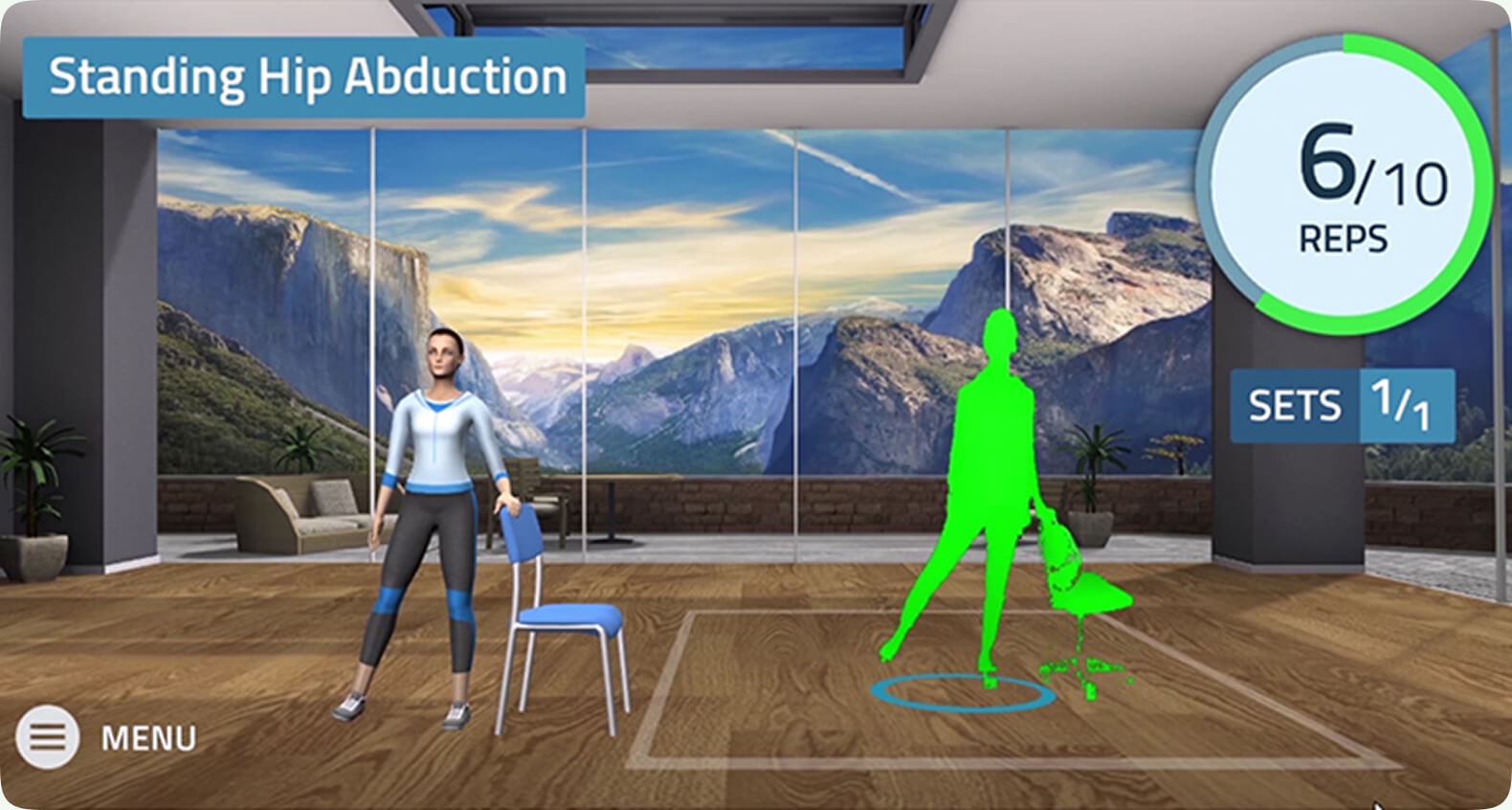
VERA’s exercise interface.
Clinical studies show that gamified rehab leads to higher adherence and faster recovery compared to traditional programs. When patients see progress visually, they’re more likely to complete sessions.
Hospitals adopting these systems report improved satisfaction, reduced therapist workload, and fewer dropouts.
Mental health & mindfulness
Engagement is the hardest part of mental wellness. Most people try meditation apps once, then never return. Gamification mental health tools solve that by making consistency rewarding.
Headspace uses streaks, progress bars, and levels to motivate daily mindfulness. Completing exercises feels like advancement, not obligation. Studies in JMIR Mental Health show that gamified mindfulness users experience lower stress and higher retention. Why? Because visible progress normalizes the habit.
Companies are catching on. Corporate wellness programs now embed gamification mental health challenges to reduce stress and boost participation. The market for gamified digital therapeutics is growing fast, blending human psychology with smart design and giving wellness a measurable business case.
Patient education platforms
Healthcare education doesn’t need to be boring and gamification is proving it. Gamification in healthcare examples now include quiz-based learning apps and web modules that award badges or certificates for mastering content.
Hospitals use these tools to teach preventive care or post-surgery routines, while pharma companies deploy them for patient onboarding. Gamified education improves knowledge retention and compliance, especially for chronic care instructions.
What’s the payoff? Stronger engagement, better-informed patients, and reduced training costs. For healthcare organizations, gamified learning is, essentially, another trust upgrade.
Implementation considerations
User-Centric Design. Effective game development for healthcare starts with empathy. Whether designing for patients or healthcare providers, understanding user motivation is key.
Overusing points or badges risks “reward fatigue”, so designers must balance extrinsic rewards with intrinsic motivation. It can be progress, mastery, or a sense of control. In mental health apps, for example, emotional tone and visual design can make or break engagement.
Ethical and Privacy Concerns. When there is health data, privacy can’t be ignored. That’s why it is important to provide: Secure data storage, advanced analytics, ethical gameplay that won’t add more stress or cause unhealthy competition.
Measurable Metrics. Gamification in healthcare must prove its value beyond engagement. Core KPIs should include:
- Adherence rates
- Frequency of app use
- Cost reduction
- Overall clinical outcomes.
For instance, measuring how gamified adherence tools improve medication compliance or how activity challenges lower employer healthcare costs gives stakeholders tangible ROI. These metrics also help refine long-term product design and justify further investment.
Key takeaways
Gamification is really chasing the way people care about themselves and others. We have proof of better adherence, stronger motivation, and data-driven care. The global healthcare gamification market is about to cost more than $15 billion by 2030. And medical organizations have to keep up.
So what comes next?
Forward-thinking healthcare companies now need development studios to bring these ideas to life. And believe it or not, there is more and more gamification in healthcare examples.
Fgfactory’s expertise in mobile and web gamification enables hospitals, startups, and wellness brands to keep up with this powerful trend. We’ve been building games and interactive products since 2010. That’s long before “gamification” became so popular.
Ready to explore how gamified healthcare can drive real outcomes? Connect with Fgfactory’s team of experts and let’s make something that touches hearts and hits health goals.




Contact us