

Creating modern video games and gaming projects is a highly demanding experience. You need more than just developers, but also a good choice of mechanics, marketing that is on the same page with the game and the genre, and also something unique in the core of the game.
And on top of that, you need high-quality visuals because anything these days can’t stay long without pictures. The help here might come from game art outsourcing companies. At the same time, many businesses also looking for game development outsourcing companies to handle full-cycle production and scale their development capabilities efficiently.
And yet, why outsourcing? Can’t you make the game with your team? Well, It is a reality of our time. Creating a game today means competing in a very crowded market. Besides, production cycles are shorter now, and expectations are higher and higher. In many cases, businesses also turn to software development outsourcing companies to support backend systems, platforms, and cross-functional development needs.
Whatever you are building, working with a game art outsourcing studio can save you time, money, and a lot of stress. But how does it all work? In this article we’ll explain it, and explore a handpicked list of the best game art outsourcing studios in Australia at the moment.
Importantly, we included in this list Australia-based studios as well as international vendors with strong Australian experience or active AU presence. Time zone alignment, familiarity with the Australian gaming ecosystem, and proven collaboration with AU publishers were the most important factors which we decided to choose.
Transparency is one of the most important factors. That’s why you’ll also find a clear breakdown of the methodology we’ve used, so you can apply the same logic when selecting your own game art outsourcing studio.
Key takeaways
- Australia has a growing ecosystem of professional game art studios.
- 2D and 3D art outsourcing remains critical for scaling live-service production.
- Pipeline maturity and engine compatibility matter more than studio size.
- Pricing transparency and communication are major differentiators.
- The list was built using structured evaluation criteria.
How We selected best game art outsourcing studios
All studios in this article were selected based on real procurement criteria. We assessed each studio’s strengths using publicly available information, and their case studies. These, we believe, signal the best what staff is capable of. We also looked at the independent review platforms, because the evaluation there reflects real-world selection criteria. In other words, everything used by producers and art directors when hiring outsourcing partners.
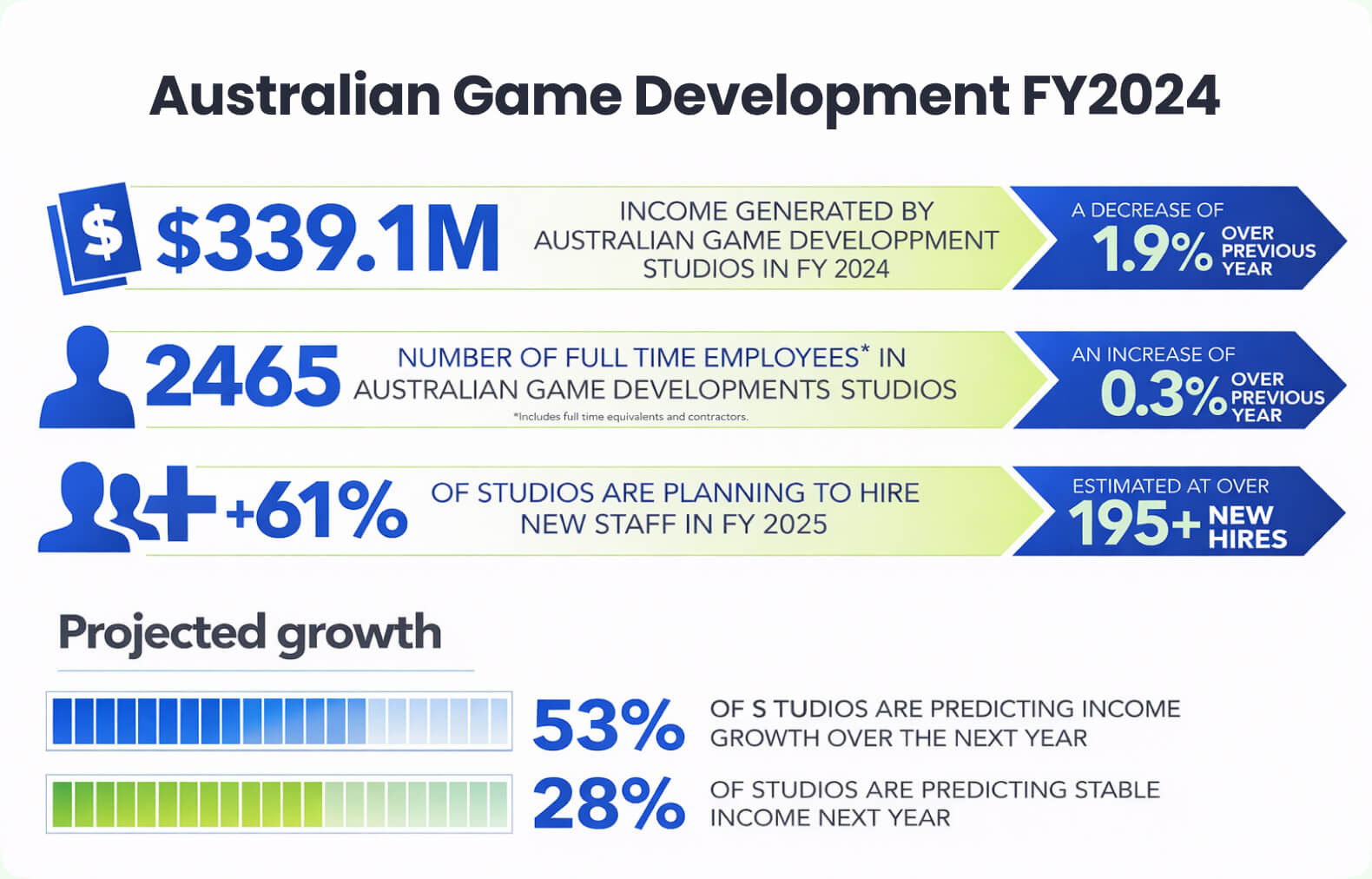
The game development market in Australia is highly active.
- Australian Gaming Industry Experience. Obviously, we concentrated on studios that have real, proven experience of working with Australian publishers or teams. That means they understand local market expectations or at least are familiar with the extent of these expectations. They also can work in Australian time zones, and know well about communication standards of this part of the world. All these factors can make delivery quicker and provide higher quality of final outcomes.
- Portfolio & Case Studies. As we said before, case studies were of great importance for us. But so were the whole portfolios. Seeing consistent artistic quality documented was one of the deciding factors to us. That matters more than marketing-heavy presentations, because, simply put, real production experience is more important than visual polish anyone can master.
- Design Stack. A unified design stack (concept art, illustration, UI/UX, 2D/3D production, and animation) is another factor we think is the most important. When we are talking about a high-quality game art outsourcing studio, they undoubtedly have to be able to deliver every part of the art pipeline. For clients, it means simply better collaboration.
- Team & Delivery Maturity. Best game art outsourcing companies all have well-defined roles. There’s an art director, 2D/3D Artists, UI/UX Designers, 2D/3D Animators, PMs and technical artists. If pipelines have milestone-based workflows, it means they are mature and ready to handle collaborations of different levels.
- Client Reviews & References. This is a rather basic point: how independent third parties (Clutch, DesignRush, Goodfirms) review their collaborations with game art outsourcing companies tells a lot about reliability and communication quality, not to mention the ability to sustain long-term partnerships. So we made sure to take a deep look at each of these platforms and see how clients talked about the studios.
- Pricing Transparency & Communication. Best game art outsourcing studios from the first conversations define scope, timelines, deliverables. And these studios are always ranked high for good reasons. Transparency is one of the most important things these days, and it is always a sign of a partner you can trust. Besides, transparency allows for more fruitful collaboration and better outcomes from a very beginning.
- Special-purpose Expertise. Art focused studios always need to have niche expertise. That can be pixel art, casual style, realistic 3D, VFX, motion capture, or anything else. But when they are so narrow, their proficiency is likely to be higher.
Pro Tip:
When interviewing any game art studio, ask specifically: “Who will be my day-to-day point of contact, and what is their role?” If the answer is vague, that’s a sign the studio lacks the project management maturity you need for an accountable collaboration.
1. Fgfactory Australia
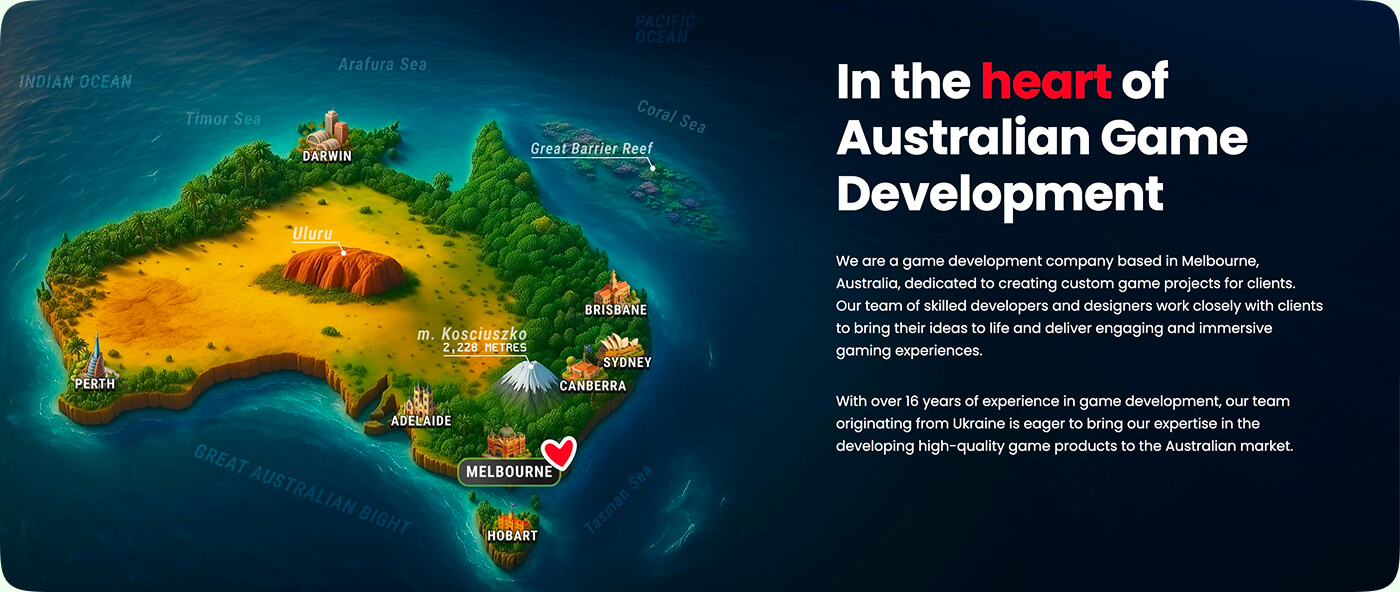
| Headquarters | Melbourne, Australia |
| Year founded | 2010 (verified) |
| Team size | ~60+ specialists globally |
| Key Expertise | 2D & 3D art, character design, animation, VFX, UI/UX; full-cycle game and development, gamification solutions integration. |
| Notable projects | Racer Club – 3D Racing Game with multiplayer and vs AI game modes; Visa Pay City web platform for coupons and offers; Winday Gamification Platform for Marketing Campaigns |
About Fgfactory Australia:
When to choose them:
Did you know?
Fgfactory won TechBehemoths Awards 2025 for Mobile App, Custom Software, and UX/UI Design in Australia, which makes them highly successful in areas besides game development.
2. Upsurge Studios
| Headquarters | Melbourne, Australia |
| Year founded | 2017 |
| Team size | ~50 employees |
| Key Expertise | Level Design, Environment Art, Characters, Animation & Rigging, Hardsurface, Cinematics, Concept Art, Movies and Simulation. |
| Notable projects | Game Art for Diablo Ⅱ: Resurrected, Raid: Shadow Legends, Path of Exile 2 |
About Upsurge Studios:
First thing you need to know about Upsurge is that they were created by AAA artists from Japan and Australia. Their range is quite big: they can work on traditional video games, but also virtual reality, cinematics, and simulation.
Their artists have worked on a few very well-known projects in the global game industry. The team’s background in large-scale productions means they are familiar with demanding pipelines, complex asset workflows, and tight production schedules.
With roughly 45 artists across both studios and a philosophy of keeping communication clean and jargon-free, Upsurge is a practical choice for international developers who’ve had bad experiences with communication breakdowns at offshore studios.
When to choose them:
This studio can deliver great work if you need detailed character art and high-fidelity visuals for AAA or high-end indie projects. If visual fidelity and cross-cultural creative fluency are priorities to you, this game art studio, no doubt, can be a great choice.
3. Chaos Theory
| Headquarters | Sydney, Australia |
| Year founded | 2012 |
| Team size | 30-50 employees |
| Key Expertise | 2D & 3D art, UI/UX design, AR/VR visuals, concept art, Mobile & Web Games Development, Serious and Transformational Games |
| Notable projects | KangaZoo (for DFAT) — Australian wildlife mobile game; Crab God — award-winning environmental impact game (AGDA 2024 winner) |
About Chaos Theory:
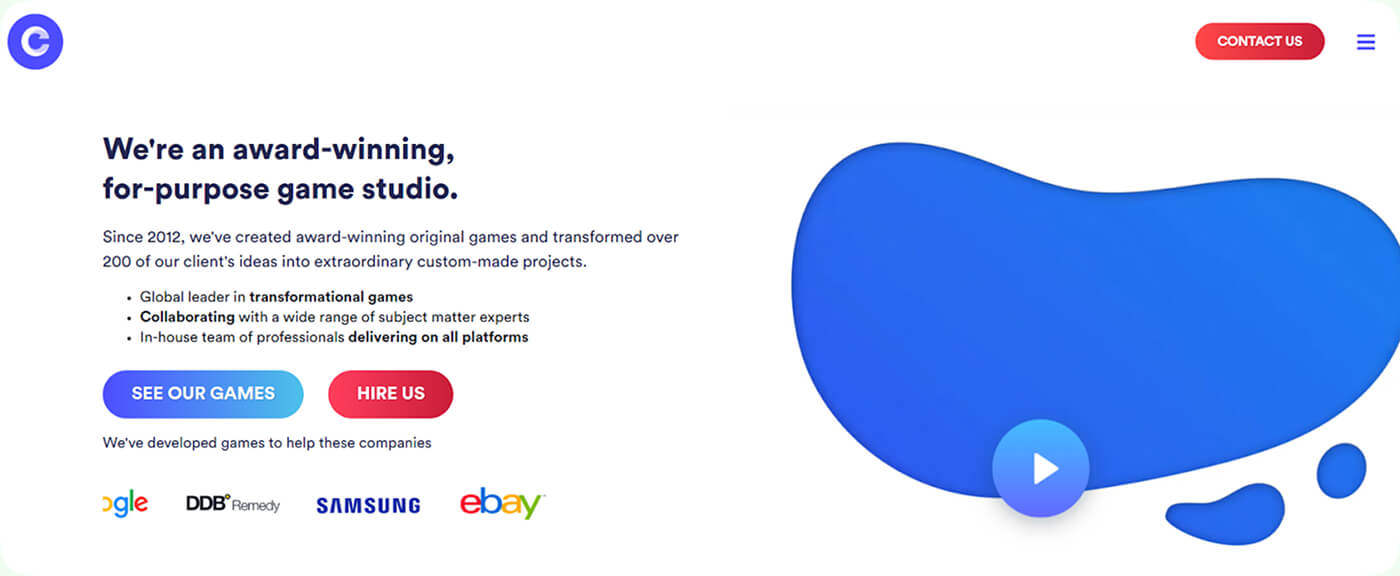
It is one of the game art outsourcing companies that completed over 200 client projects and accumulated more than 70 million downloads across their portfolio of 100+ titles, so you immediately know they have experience to impress with.
The team worked a lot on narrative-rich games. For example, they collaborated with the University of Sydney, Telstra, eBay, and the United Nations World Food Programme. In other words, organizations that needed game art to carry real weight and serve real goals. These are the things that you might want to pay attention to when choosing a 3d game art outsourcing partner.
Many clients, when it comes to reviews, note bug-free delivery, and developed design sensibility. Besides, they also have excellent job management.
When to choose them:
If you have a brand, agency, organization that needs game art designed to get very specific outcomes, this is your choice. These goals can be in education, training, marketing activation, or social impact.
4. Blowfish Studios
| Headquarters | North Sydney, Australia |
| Year founded | 2008 |
| Team size | 51–200 employees |
| Key Expertise | Full-cycle game development and co-production, concept art, cinematics, character art, VFX, motion tracking, audio, QA |
| Notable projects | Projection: First Light multi-platform award-nominated title; Phantom Galaxies: open-world sci-fi RPG with Web3 integration |
About Blowfish Studios:
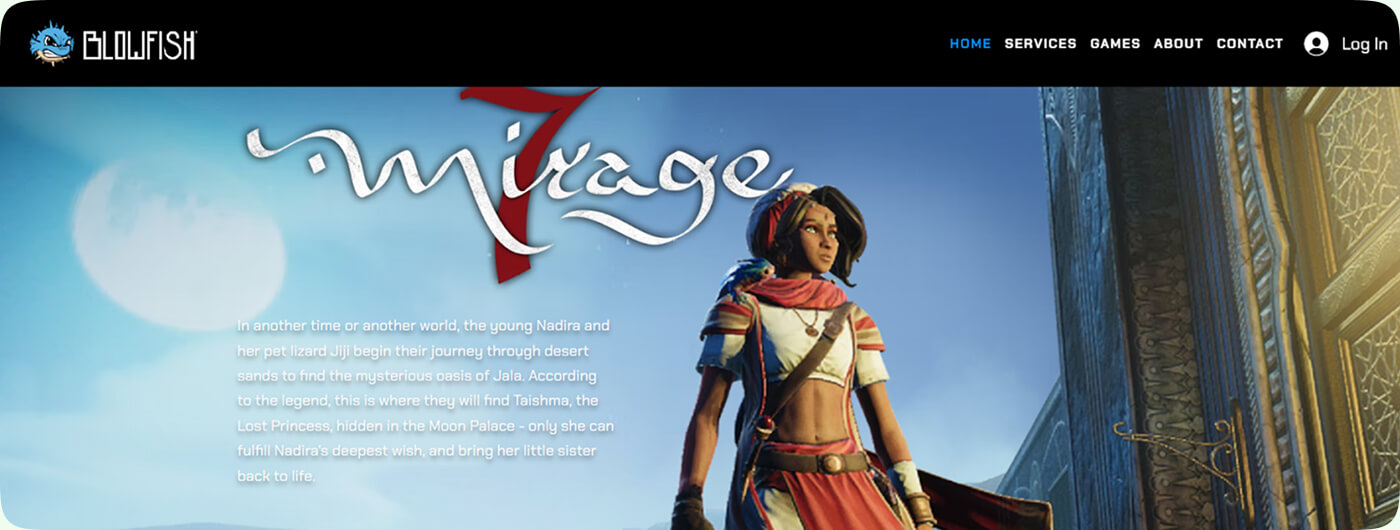
Blowfish Studios is an award-winning Sydney-based developer and publisher founded in 2008 by Benjamin Lee and Aaron Grove. This is more of a complete co-development partner than a traditional art-only outsourcer. Their team has grown a lot since the Animoca acquisition they recently had.
Their released titles demonstrate genuine range: Storm Boy (a literary adaptation), Projection: First Light (a BAFTA-nominated shadow puppet platformer), Phantom Galaxies (open-world blockchain RPG), and Blood of Mehran (an action-adventure released in October 2025). Their work with Valiant Entertainment on a multi-game superhero slate is also impressive and shows how they can handle IP-driven, commercially ambitious co-development.
When to choose them:
If you are looking for co-development or publishing partnerships with creative art production and full engineering capability under one roof. Especially relevant to console and PC titles.
5. Mode Games
| Headquarters | Sydney, Australia |
| Year founded | 2014 |
| Team size | 6 core + specialist contractors |
| Key Expertise | Mobile and web game development and art, HTML5 games, UI/UX, 2D game art, gamification, branded and promotional games |
| Notable projects | Dog Man and Captain Underpants mini-games (Scholastic); Usain Bolt promotional game (Optus) |
About Mode Games:
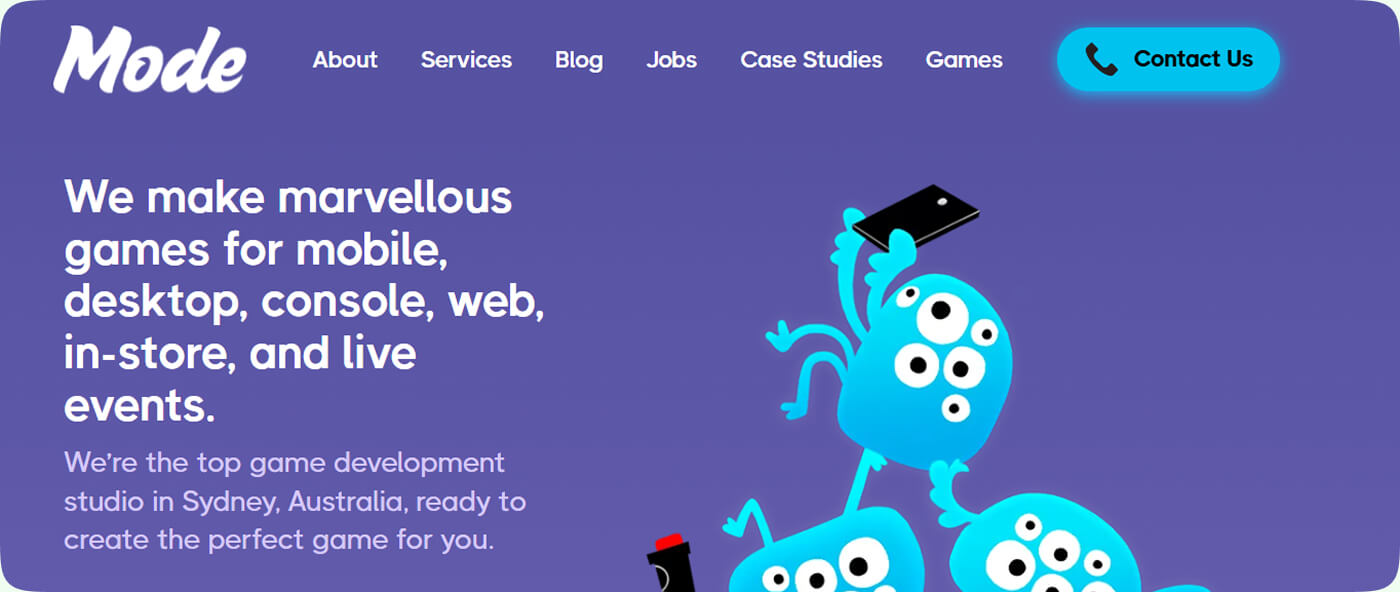
It is a lean, purposeful Sydney-based studio that has spent over a decade in the gaming industry, and, for most years they did it at a consistently high level. Their team of six core specialists operates from the heart of Sydney supported by specialty contractors covering pixel art, AI programming, and general resource scaling as needed.
Such a structure means clients work only with senior people on every project, which for many top-tier projects is a huge benefit and even demand. With over 100 games in their catalog and budgets ranging from $20K AUD to over $1M, they occupy a practical mid-market position that many studios don’t cover well.
When to choose them:
Brands, agencies, and organizations that want commercially-focused game art and development for mobile, 2d game art outsourcing, web, or in-store activation. Also, if you want to work with senior representatives, that’s the company for you.
6. Orb Art Studio
| Headquarters | Brisbane, Australia |
| Year founded | 2010 |
| Team size | 50+ |
| Key Expertise | Concept art, character design, illustration, comic art, NFT |
| Notable projects | World seed online, Castles the NFT game |
About Orb Art Studio:
Orb Art Studio is an Australian-founded digital art and game design studio built around the creative leadership of James O’Reilly, with a globally distributed team of artists. The team is not huge, but they have high-level specialists in design, character art, environment art, 2D and 3D game art, animation, and visual storytelling. Founded and headquartered in Brisbane they have a reputation of a flexible partner that can adapt to wildly different project styles.
When to choose them:
Well suited for startups and independent developers. Especially if you need a reliable art partner for 2D and concept-heavy game projects. If you need assets that can be a good fit in game engines and VFX pipelines, Orb studio can handle that.
7. Code and Visual
| Headquarters | Sydney, Australia |
| Year founded | 2008 |
| Team size | Under 49 |
| Key Expertise | Interactive applications, game development, animation |
| Notable projects | Mastercard touchscreen tennis game (with McCann); digital tools and apps for Australian National University |
About Code and Visual:
It is a Sydney-based digital agency. It is one of those game art outsourcing companies that does game development, interactive design, and many other things on a really good level.
Code and Visual is a proudly 100% Australian operation with presence in Sydney’s Barangaroo, Canberra, and Brisbane. Their team is deliberately small. It is a senior-led and boutique in structure.
And yet, their client list is anything but: Mastercard, McCann, Australian National University, and various federal government bodies have all worked with them. Their game art and gamification work skews toward browser-based and mobile games with a strong UX sensibility, branded activations, touchscreen installations, and interactive campaigns.
When to choose them:
Best suited for brands and agencies that need game art and interactive experience design in service of marketing, activation, or educational goals. As the company states itself, they are open to work with commercial, government and not-for-profit brands. If you value direct communication with the creative lead on every deliverable, this is the right choice for you.
8. Monkey Stack
| Headquarters | Adelaide, Australia |
| Year founded | 2004 |
| Team size | 50+ |
| Key Expertise | Game art and development, 2D animation, XR (VR/AR/MR), serious games, interactive installations, motion design, cinematic VFX |
| Notable projects | Works for Australian Space Discovery Centre, Australian Museum, BAE system Australia |
About Monkey Stack:
This is one of the longest-running creative digital studios in Australia. Co-founded by Justin Wight, Troy Bellchambers, and Shane Bevin, Monkeystack describes itself as a “digital chameleon”. And that self-characterization makes more than total sense.
Their team has delivered serious games, XR experiences, 2d game art outsourcing, VR installations, and screen-based interactive content for clients including Nickelodeon, and the ABC Network.
Their game-specific credentials are strong. Plus, their deep ties to South Australian universities and IGDA membership make them a well-connected local partner for those clients who value industry relationships.
When to choose them:
Good for studios and organizations in South Australia or beyond that need a multidisciplinary creative partner. If you are looking for a studio that has proven experience in animation, game art, XR, and interactive experiences, this is the right choice of a studio. Moreover, if your company needs game art for education purposes or social impact-driven projects, Monkey Stack can help here, too.
9. ZERO ONE
| Headquarters | Melbourne, Australia |
| Year founded | 2010 |
| Team size | Small to mid-size specialist team |
| Key Expertise | Game art outsourcing, in-game assets, cinematics, 3D animation, VFX, VR experiences, Unreal Engine, virtual production |
| Notable projects | Luigi’s Mansion 2 HD for Nintendo Switch, Capes, Far Cry |
About ZERO ONE:
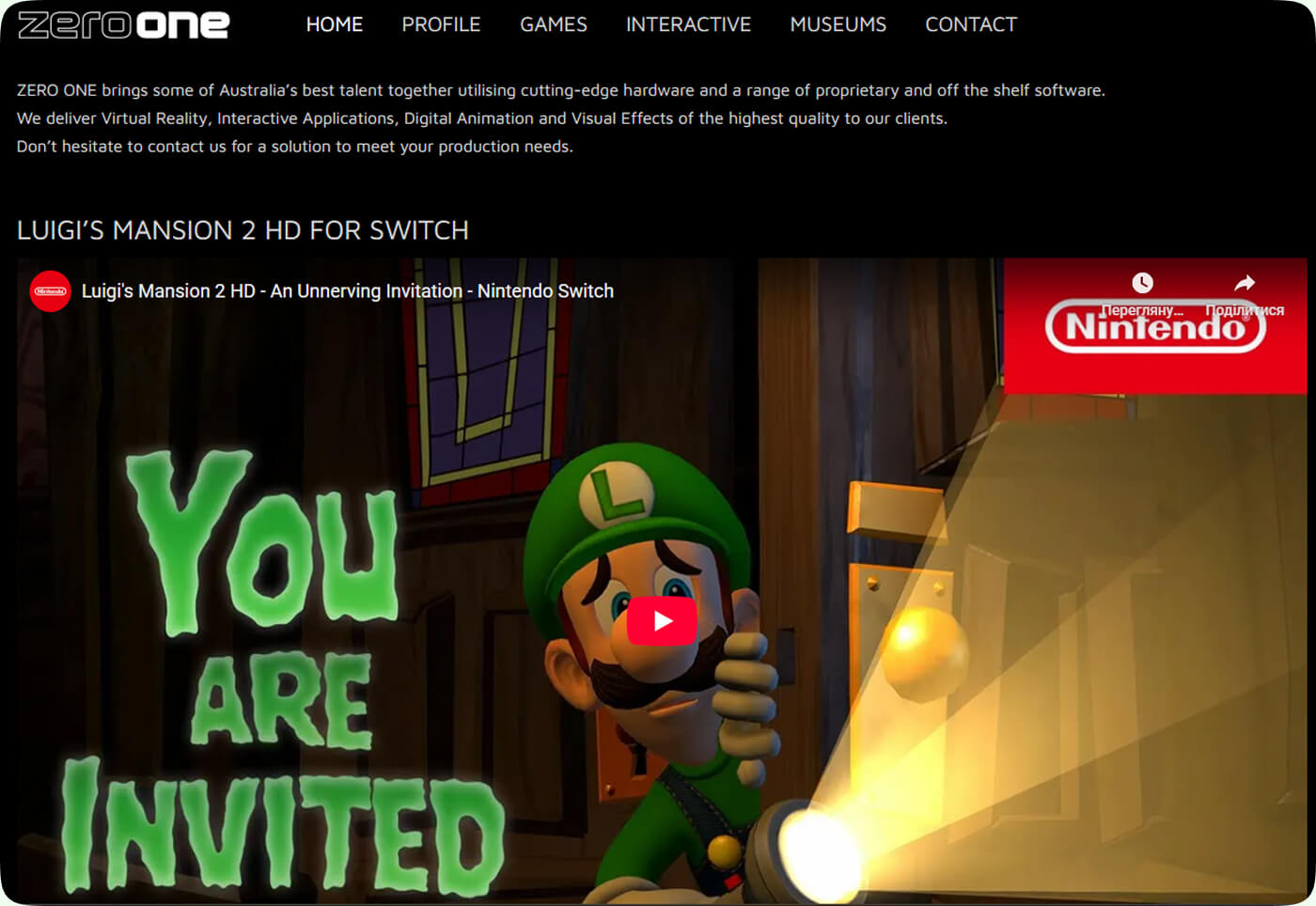
It is one of Australia’s most experienced game art outsourcing studios, with a track record that stretches back well over 15 years and a client list that includes Microsoft Game Studios, Dreamworks Interactive, Warner Bros. Interactive, Nintendo, and Ubisoft.
Based in Melbourne, the studio specializes in in-game assets, cinematics, animation, VFX, visualization , and interactive experiences, and they’re one of the few Australian studios that can credibly claim AAA-level client work.
When to choose them:
The go-to studio for game art outsourcing that demands AAA-level polish. Especially if your project involves engine porting, cinematic asset rebuilding, or complex VR/interactive deliverables.
10. Mortar Studios
| Headquarters | Tamworth, New South Wales, Australia |
| Year founded | 2013 |
| Team size | Not publicly disclosed |
| Key Expertise | Photoreal 3D character art, digital humans, garment simulation, hair grooming and card creation, AR experiences, Unreal/MetaHuman pipeline |
| Notable projects | Game character assets for the game for Flintlock: The Siege of Dawn; The KookaburrAR Augmented Reality App |
About Mortar Studios:
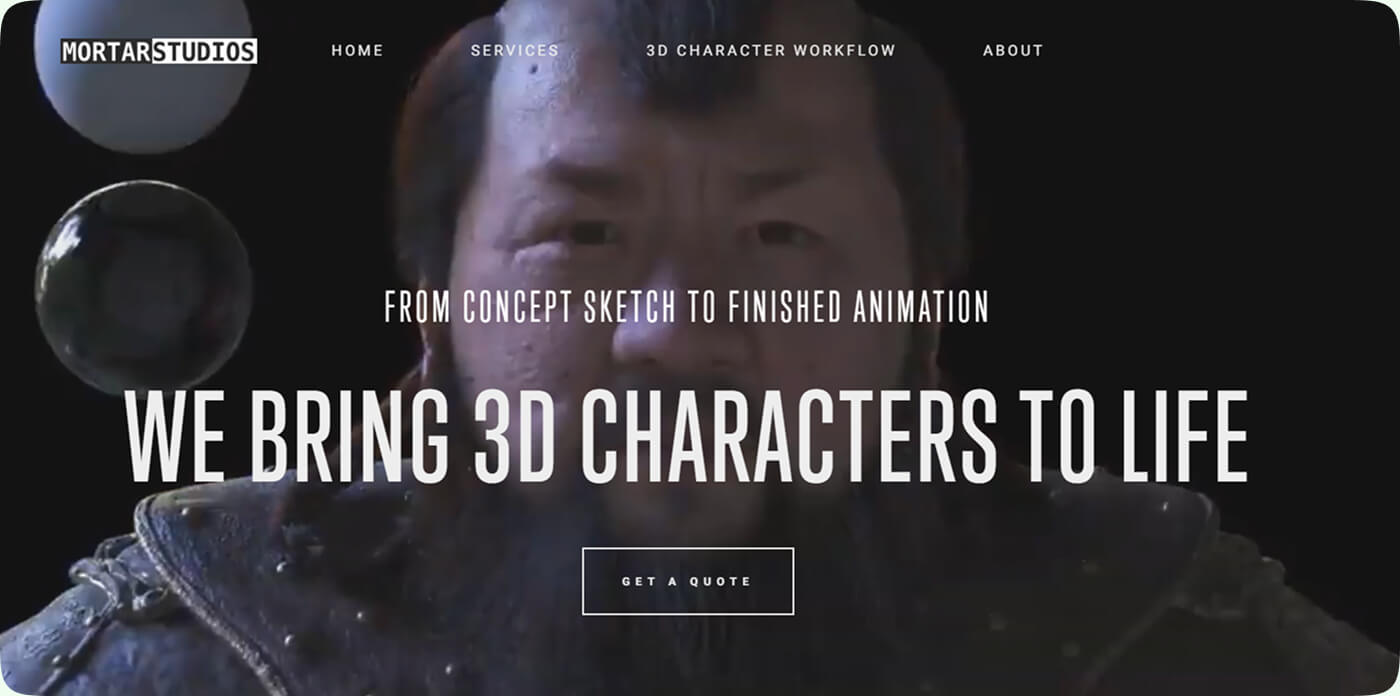
Mortar Studios is an Australian 3d game art outsourcing studio founded in 2013 and based in Tamworth, New South Wales. They collaborate with game developers and production teams worldwide, and yet have very good experience on the local market.
The main focus of this game art studio is realistic character production. That includes modelling, digital costumes, hair grooming, and animation. Its artists use modern production tools and version-control systems to use it in the AAA pipelines their clients already have.
Interestingly, they have delivered augmented reality experiences for Australian retail and safety industry clients. They are also known for producing optimized assets that work for real-time engines and VFX productions from the same pipeline. Their team is described on their own site as highly adaptable and driven to push creative limits, and their portfolio reflects that.
When to choose them:
Mortar Studios is a strong choice for photorealistic character modelling and AAA-quality 3D asset production. If your pipeline runs on Unreal Engine and you need MetaHuman-ready characters with custom grooming and optimized hair cards, you can expect this studio to do an excellent job.
How to choose the right game art outsourcing studio
Once you have to choose a video game art outsourcing studio, you face a framework issue: how, exactly, should you select one studio? How to understand who fits your goals and requirements?
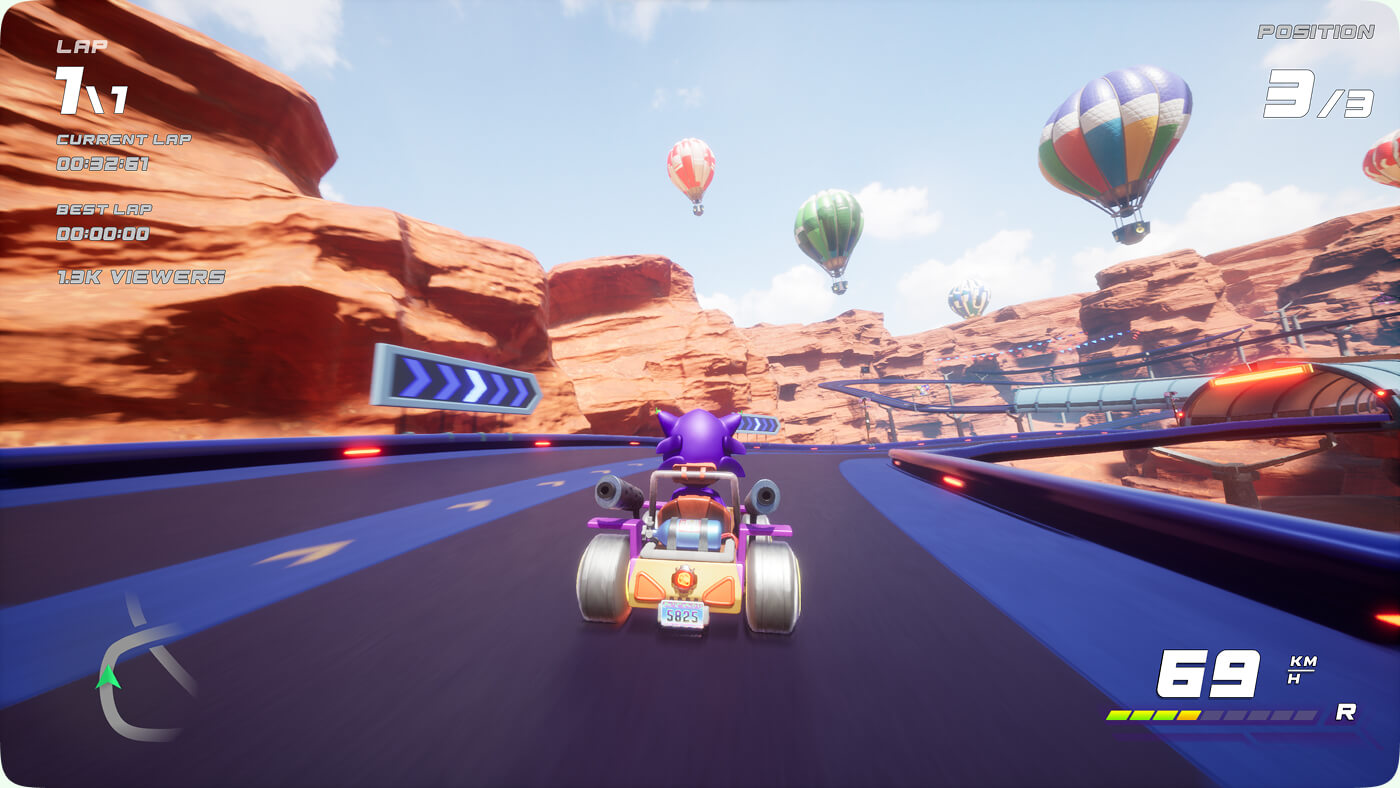
One of the game visuals created by Fgfactory
It’s a big question, because choosing the right art outsourcing partner means choosing what would be the product you receive. It will impact visual consistency and production speed of your project. And of course it will have an effect on the overall game quality.
So, let’s see what you should know when making your choice, and what best game art outsourcing companies should have in common.
Checklist: What to evaluate before signing a contract
- Clear NDA & IP Ownership. Any professional studio (not necessarily an art studio, but actually any outsourcing partner) signs an NDA before you start sharing sensitive materials. This is a legal foundation of your trust, at least one of its parts. This should be the beginning of your professional relationship, and it should set the whole legal basis for the rest of your collaboration. Contracts must show IP ownership, asset transfer terms, and usage rights. All final assets should belong to the client upon payment.
- Documented Pipelines. What differentiate experienced, high-quality studios is an existing art pipeline. As a client, you should see pre-production and style, and understand that delivery is based on milestones. There should also be internal QAand revisions, which would help to make the product better. You may also expect final export and optimisation. What’s the point of a documented pipeline, you might wonder. Well, it shows that you can expect high-class results, and it highlights a simple fact that the studio has done it before.
- Experience with AI tools.
- Engine Export Readiness. When you work or about to work with game art outsourcing companies, you must know if they have production-ready assets for the target engine (Unity, Unreal, or custom). In other words, you should see correct formats, PBR workflows, proper topology and LOD setup, optimized performance standards. Best game art outsourcing studios have these, and they understand engine requirements very well. They reduce integration time to the minimum.
- Playable Demos or Production Samples. Explain that reputable studios can provide: In-game screenshots, Playable builds, Animation reels, Real technical samples. Concept art alone is not sufficient proof of production capability.
- Test Assets & Style Match. How do you usually understand that you and, say, 3D game art outsourcing studio, are a match? One of the ways to determine that is to request a small paid test task. You can also take a look at the previous assets made by an art outsource studio that matches the required style. You have to see that your future partner can deliver visual results that you require.
Red flags to watch for
Once you know what to evaluate before signing a contract, you also need to know what are some red flags. You don’t want to face potential production risk by choosing the wrong vendor. So, here are some things that you should know before signing an agreement with a game art studio.
- Refusal to Sign an NDA. The first red flag is a good reason to walk away: If a studio hesitates to sign a Non-Disclosure Agreement before discussing project details, they are just, you can safely assume, not professionals. Signing an NDA is a standard procedure, and it is non-negotiable. When you are working on a game, confidentiality is extremely important. After all, you’ll be sharing a lot of intellectual property: game concepts, mechanics, unreleased assets, and more. Refusal to sign an NDA opens unnecessary risk you don’t need and don’t have to take.
- Vague or Unclear IP Clauses. Another red flag dimension also lies in potential legal uncertainty. Contracts that do not define ownership of final assets and source files, is not something you should sign. Just make sure that all deliverables (raw files, layered PSDs, 3D source files, animations, etc) are fully transferred to the client upon payment. If you don’t do that at the beginning, you’ll have a ground for disputes later. That, in turn, can cause restricted usage which will put shade on your final product.
- No Real Shipped Projects. Anyone can have a polished portfolio, but that does not always mean they have real production experience. And you are definitely looking for the latest. So, always ask a game art studio to demonstrate how exactly they were involved in shipped titles. Check their commercial releases, and specify what was the real-world pipeline experience. Sure, mockups can tell you a lot, but they won’t show iteration cycles that, for example, 3d game art outsourcing studio made. And that’s something you want to know about.
- No Technical Export Examples. Game art is not just a set of pretty pictures that the studio has produced for you. It is actually a vital part that must function inside an engine. Always ask for examples of assets exported to Unity, Unreal, or another engine ( LODs, topology, PBR textures, rigging, or animation integration). If they cannot do that, you may expect huge integration risks later. But if you learn that at an early stage, if you see that technical readiness is not there, you can start looking for a different vendor. The bottom line is simple: the technical part is just as important as artistic quality.
- Unrealistic Pricing or Timeline Promises. There are two extremes when it comes to facing a dubious game art outsourcing studio: too low a price or guaranteed super quick timeline. None of that is realistic or safe. There are too many hidden issues you might face with these promises. Maybe that art outsource studio simply underestimated scope, but that also shows inexperience planning or resources. The thing is, any professional studio can provide estimates based on clear deliverables and review cycles. They understand how much time can take the complexity of a project. But if you hear overpromises, expect rushed production and missed milestones, not to mention budget overruns.
- Overreliance on Portfolio Mockups Without In-Game Validation. Highly stylised or cinematic portfolio pieces are maybe good to have, but don’t let them give you the wrong idea. It’s just like with a nice portfolio – it doesn’t say the whole story. What you need is to see the production-ready assets. Ask for in-game screenshots, optimization examples, and performance-ready models. Some assets are often designed only for presentation, and that’s, without doubt, not enough for the game. If they don’t meet engine constraints or gameplay requirements, there’s no value in them.
Did you know?
As a rough benchmark, a single high-quality 3D character asset with rigging, textures, and LODs typically takes a professional studio between 3 to 6 weeks.
Why Fgfactory stands out from other companies
On the top of the list we have Fgfactory. But what makes this company earn such a position?
First of all, they have proven experience in game art and animation services. Since they have been on the market for almost two decades, they delivered 2D and 3D game art, character and environment design, animation and VFX, UI/UX for games, not to mention technical art and engine-ready assets. This is a huge advantage for clients looking for a reliable partner. Simply knowing that the studio has shipped hundreds of titles over the years is already a sign that.
Fgfactory is not a regional studio that just happened to have a few international projects. No, they’ve actively built a global client base, but also managed to maintain relevance for the clients from the Australian market. That matters a lot, because clients in that market have specific expectations around communication, and professional standards that not every overseas studio is familiar with and simply not always can meet.
And the industry has taken notice. In 2025, Fgfactory was recognized as a TechBehemoths Award winner in Australia across several nominations, including UI/UX Design. It is a competitive category that puts studios up against the full field of Australian digital service providers.
In the portfolio, you can see work done for clients across multiple continents, which means they understand how to work with extremely different creative briefs and different feedback styles.
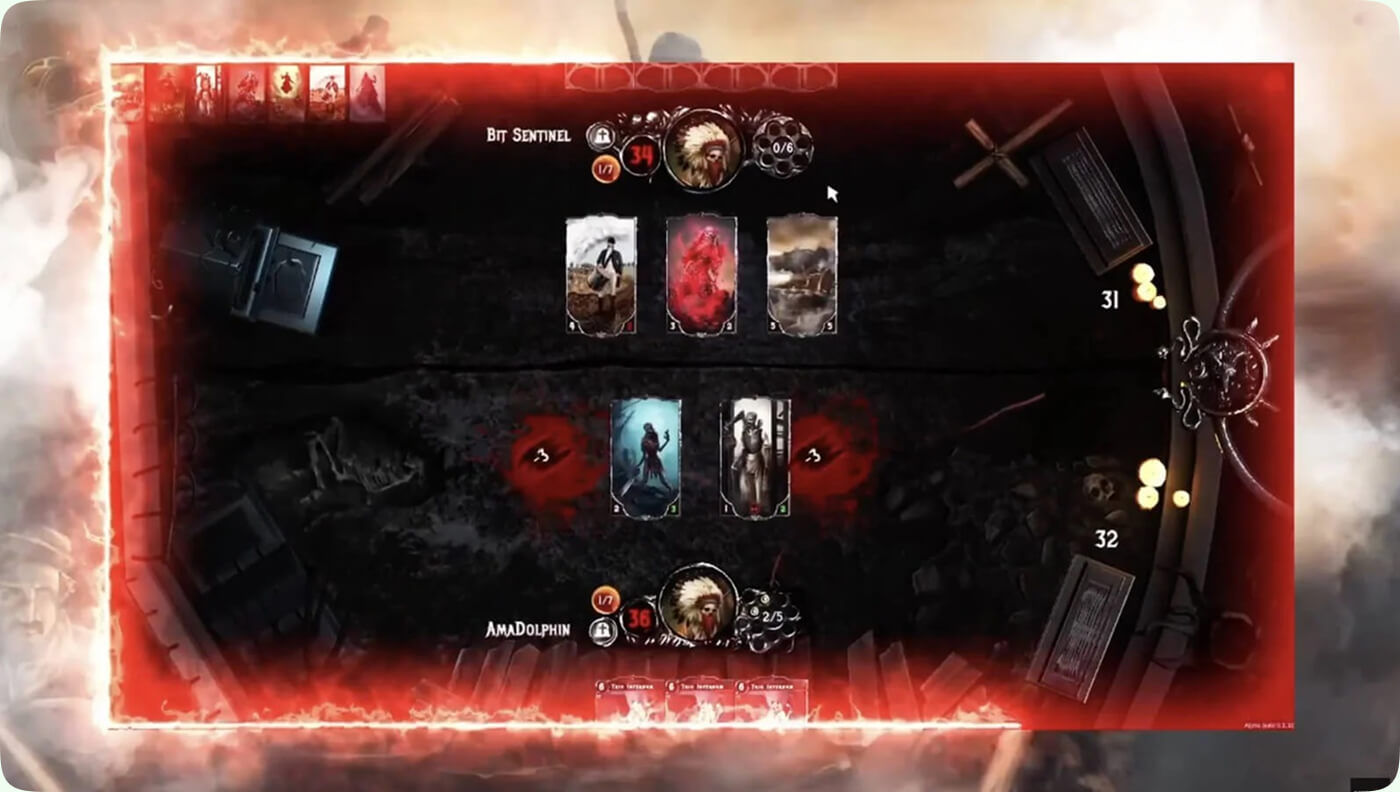
Dark Country, a PvP real-time player game, developed by Fgfactory.
There’s a difference between a game art outsourcing studio that can make assets and one that makes assets that work inside your engine.
Their technical capabilities include Unity and Unreal Engine integration, physically-based rendering (PBR) workflows, optimized topology and LOD (level of detail) setup, rigging and animation pipelines, and export-ready assets built specifically for real-time engines. In plain terms: what they hand over is ready for production, and you don’t need a bunch of extra rounds to make things prepared.
Another thing that always differentiates a reliable partner is operational maturity. Fgfactory has dedicated art directors and project managers who work with you on a project, not to mention well-structured milestone delivery and clear documentation. This is one of the most important things when it comes to the backbone of collaboration of any video game art outsourcing company.
Finally, with flexible engagement models that include full-cycle art production, dedicated art teams, project-based outsourcing, and scalable support for live-service projects, you can receive the highest quality of work for whatever goals you have. Request a Quote, if you are looking for a long-term partner that can cover your game art needs and offer something bigger than one-off delivery and treat your vision like their own.


Contact us